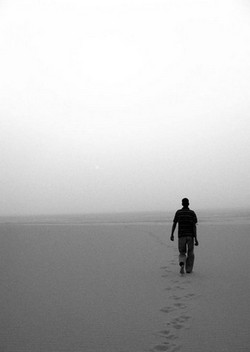
"Therefore, I will now allure her and bring her into the wilderness and speak tenderly to her." (Hosea 2:14m NRSVue)
Desert-dwelling is a timeless trope of Judeo-Christian spirituality, whether it be the story of Moses and the Children of Israel wandering in the wilderness or the temptation of Jesus in desert isolation. In this passage from the Hebrew Scriptures, the Prophet Hosea even finds the wilderness to be the perfect place to rekindle his relationship with his unfaithful wife, Gomer, an acting out of God's desire for reconciliation with the wayward Children of Israel. Places of desolation function in the Bible both as the dramatic geographical settings for sacred narrative and also as metaphoric realms where the physical need to sustain life in extreme circumstances images the hunger and thirst of the human soul for God in trying times. This week, I'm starting a new season of What's New entries with a multi-week series on Ways in the Wilderness that will take us up to Advent. We begin with a survey of biblical characters whose lives were defined by times spent in desolate spaces from Abram's and Sarai's journey into the unknown in search of the One True God to the Temptation of Christ in the Wilderness. I'll also be looking at the Desert Fathers of the early Christian period, who sought divine union away from civilization, as well as a modern desert-dwelling hero of the faith, St. Charles de Foucauld, ending with a new entry to my artist listing--Egyptian Coptic Artist Shenouda Esmat Aziz, who took the accompanying photo while following ways through the wilderness of the Sinai Desert. (John Kohan)