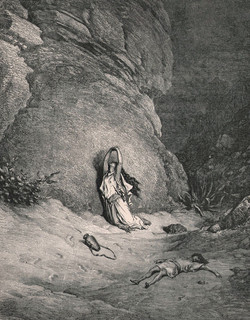
So Abraham rose early in the morning and took bread and a skin of water and gave it to Hagar, putting it on her shoulder, along with the child [Ishmael] and sent her away. And she departed and wandered about in the wilderness of Beersheba. When the water in the skin was gone, she cast the child under one of the bushes…for she said, “Do not let me look on the death of the child”…And God heard the voice of the boy, and the angel of God called to Hagar from heaven and said to her, “What troubles you, Hagar? Do not be afraid, for God has heard the voice of the boy where he is. Come, lift up the boy and hold him fast with your hand, for I will make a great nation of him.” Then God opened her eyes, and she saw a well of water. She went and filled the skin with water and gave the boy a drink.
(Genesis 8:14-19, NRSVue)
The story of Hagar and Ishmael is a classic example of how human impatience can thwart divine agency. When the aging wife of Abraham showed no signs of conceiving the heir promised by God, Sarah convinced him to have a child by Hagar, her Egyptian slave, setting the stage for a bitter rivalry between mothers and sons once she had given birth to Isaac, the long-expected miracle baby. Abraham sought to end the dispute by sending Hagar and her son, Ishmael, into the wilderness, perhaps, pointing her in the direction of her Egyptian homeland--an act of expulsion that brings to mind the soon-to-be described ritual of scape-goating. Moved by the plight of the outcasts, God sent an angel to save them from dying of thirst, securing Ishmael's place as the father of the Arab people. In the version of the story found in the Quran, the event takes place in the Valley of Mecca, which Ishmael and Abraham will later turn into the spiritual center of Islamic worship. Gustave Dore, the mid-19th century French Bible Illustrator, recreates the scene with all the dramatic excess of a performance by Sarah Berhardt, the reigning queen of Belle Epoque Parisian theater. (John Kohan)