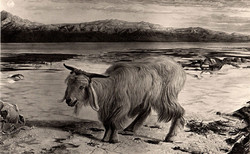
[The High Priest] is to lay both hands on the head of the live goat and confess over it all the wickedness and rebellion of the Israelites—all their sins—and put them on the goat’s head. He shall send the goat away into the wilderness in the care of someone appointed for the task. The goat will carry on itself all their sins to a remote place; and the man shall release it in the wilderness. (Leviticus 16:21-22, NIV)
We are all familiar with the word, "scapegoat," referring to an innocent person set up to take the blame for others. Most of us are unaware the term originated in an ancient atonement ritual practiced by the Israelites during their time in the wilderness, as described in this passage from the Book of Leviticus. In what to modern eyes is a particularly cruel twist on the rite of animal sacrifice, a goat was selected to be the bearer of the sins of the community, then, set loose to die in a remote spot in the desert. This "escaped" goat was later seen by Christians as a prefiguring of Jesus who took on himself the sins of the world on the Cross. Pre-Raphaelite English Painter William Holman Hunt was obsessed with capturing the historicity of subject and setting in artworks on biblical themes and spent over two weeks at the Dead Sea making preliminary sketches for a bizarre painting on the subject. When a model goat succumbed to the hellish wilderness conditions, the highly eccentric artmaker finished the painting in his Jerusalem studio, posing another one in a salt water pool. The horrific details of The Scapegoat, seen here in a 1905 reproduction, disturbed the Victorians as much as they do modern viewers. As Art Critic John Ruskin acidly noted, Hunt seemed so absorbed by the theme he had forgotten how to paint a convincingly real animal. (John Kohan)