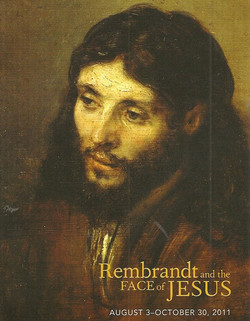
The Rembrandt and the Face of Jesus Exhibition at the Philadelphia Museum of Art and the Detroit Institute of Art fully deserves to be called a "once-in-a-lifetime" art event, bringing together for the first time in a museum show seven of eight known oil studies of Christ, which Rembrandt painted in the mid 17th century. The question of what Jesus looked like has preoccupied sacred artists down through the ages. You can see a sampling of portraits of Christ in the first rooms of the show, conforming to traditional medieval and Renaissance notions of the perfect human. In Jesus and the Woman Taken in Adultery, on loan from London's National Gallery, Rembrandt also followed prevailing tastes early in his career, portraying a majestic Jesus with golden tresses. Then, in the 1650s, the Dutch artist took the revolutionary step of painting Jesus "from life," giving him the features of a young Dutch Jew. This poignantly human, Jewish Jesus appears in the core images of the exhibition: the seven small panel paintings of the head of Christ and the splendid Supper at Emmaus, on rare loan from the Louvre Museum in Paris. Contemplating these paintings and the hauntingly beautiful, Christ with Arms Folded, the half-figure image of Christ in the "new style" from the Hyde Collection, which ends the Philadelphia show, you can't help but wonder how both sacred art and Jewish-Christian relations might have been transformed had Rembrandt's profound innovation in Jesus imagery not been largely ignored by later generations of European artists and theologians. Lovers of Rembrandt and of religious art will also be delighted to see the exhibition's fine selection of prints and drawings of Christ, including his famous Hundred Guilder Print. Rembrandt and the Face of Jesus is on view at the Philadelphia Museum of Art until October 30, then, moves on to the Detroit Institute of Art from November 20 until February 12, 2012. (John Kohan)