Mary Jane Miller
(b. 1954)
The UNESCO World Heritage Site of San Miguel de Allende, Mexico, offers religious art lovers unique attractions like the pink pointed spires of the Parish Church of the Archangel Michael and the nearby Santuario de Atotonilco, reknowned as Mexico's Sistine Chapel. An art studio in an urban hacienda just a few blocks away from the Spanish-Colonial heart of this jewel box city also deserves a place on sacred art itineraries. In this land of illuminated Mayan manuscripts, monumental Social Realist murals, and, of course, the surrealist paintings of Frida Kalho, American Artist Mary Jane Miller has devoted the last three decades to mastering the ancient art of Byzantine icon-making.
How the New York-born Miller came to pursue an Early Christian style of art from the Byzantine Empire in what travel journals call “the best small city in the world” is a tale worth telling. In 1975, after three years of art studies in Boston, Miller was restless. On a whim, she found an international directory of art schools in the library, opened the tome, and stuck her finger on the entry for the Instituto Allende in San Miguel de Allende. With all the bravado of a 21-year-old ingenue, Miller headed south of the border, knowing no Spanish and little of Mexican culture. Within 18 hours of her arrival in San Miguel de Allende, she met her future husband, Valetin Gomez, on an evening promenade in the main square and went on to make the city her home.
The artist’s passion for iconography came about in an equally serendipitous way. When Miller was invited in 1995 to a workshop on icon-making in a Tennessee church basement, she was reluctant to go, having no particular interest in this arcane art form. It proved to be a five-day experience that would change her life. Saint Michael the Archangel, a traditional subject for beginning icon-makers, is said to come to them with a message. Miller’s divine missive was to “paint and pray.” And she did exactly that—teaching herself with “patience, practice, and prayer” the laborious technique of tempera painting, a medium she believes “reveals a marvelous tiny world where we comprehend the unseen and make it visible.”
When Miller sets out to make icons in her studio, looking out at a garden with native plants and birds, she is ever mindful of working with the basic building blocks of the universe. The rocks, dust, and natural materials ground into particles for color pigments bring to mind the beauty and diversity of creation. The egg yolk that binds them represents the raw potential for life. When combined, they create material images of the immaterial. As Miller explains: “The Orthodox icon painters teach that these two elements are mixed together to create divine images, which speak of spiritual life, making seen the unseen. The ground stone and egg yolk subtly teach the painter how flesh and spirit mysteriously intermingle.”
Miller adds women to her icons, where they have been absent in the past, honoring long-neglected heroes of the faith whose gender excluded them from sacred imagery. She has revitalized portraiture of the Virgin Mary with unconventional variations like her depiction of the Mother of Christ as a contemplative, embellished with hand-hammered pewter decoration by her husband, Valentin, or communing with a hummingbird, revered in pre-Columbian cultures as a messenger from the spirit world. “I am a rebellious explorer,” says Miller. “I have gained freedom and confidence after being told I can’t, I shouldn't, or my work is outside tradition. But I am a woman. What can you expect?”
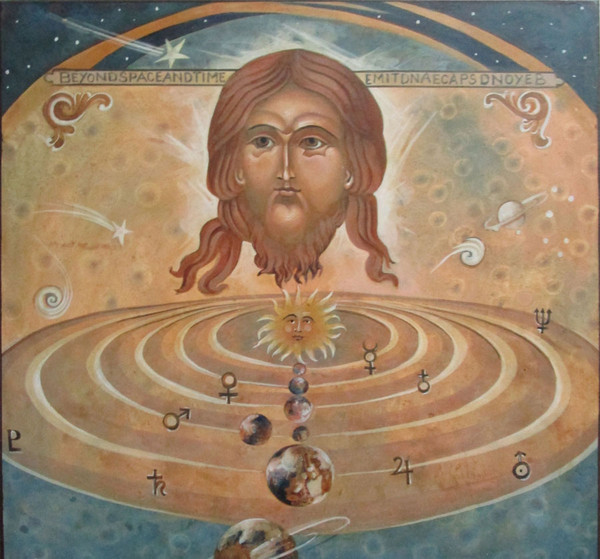
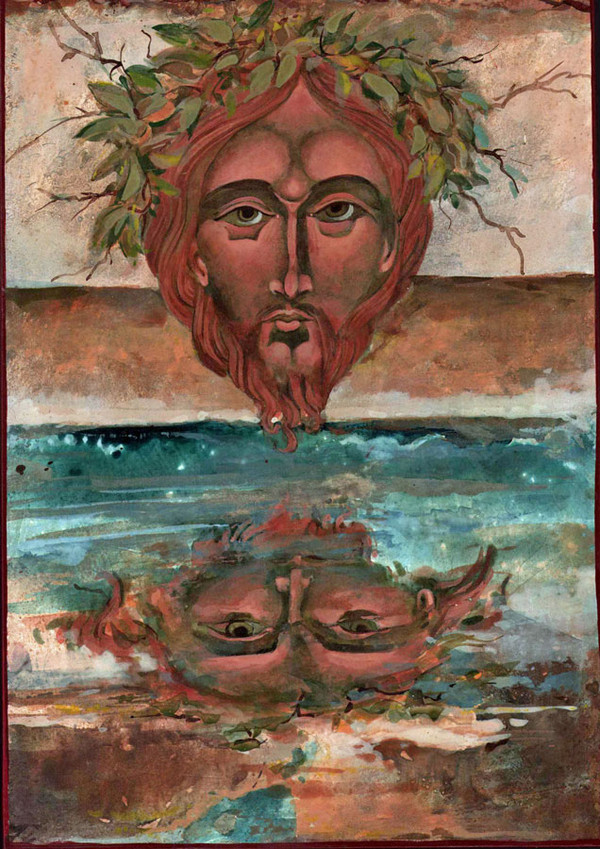
The icon-maker’s depictions of Christ are equally bold in upending conventions. Miller presents Christ as the Logos of the Gospel of John—the creator of the universe—who surveys the planets in their orbits as the Divine Draftsman satisfied with his work. Wearing a garland of greenery that mimics a crown of thorns, Christ, the well spring of life and love, looks out at us, mirrored back on a rippling surface of water, which reminds us we all carry the ephemeral image of God incarnate. It challenges the classical myth of Narcissus, obsessed with his own reflection. As the artist explains: “I’m still exploring the Jesus story, It seems to me to be endless.”
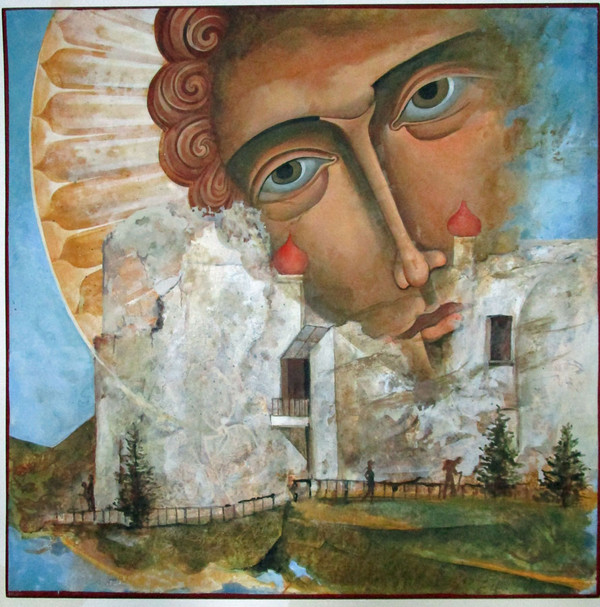
The eyes are everything in iconography, viewed by the Eastern Orthodox as a portal to the soul. Miller expands this tradition in her unorthodox depiction of the Holy Spirit as two huge eyes, staring out at us with such fierce intensity they destroy all the institutional forms of religion, represented by collapsing churches, which deny the believer an unmediated encounter with God. This icon can be seen as a distillation of Miller’s artistic mission. “I want to bring people closer to God,” she says. “Not church-God or my God or iconography’s God. I just mean God. Iconography is like a window in a dark room: if you go right up next to the window and push your face up against the glass, you’ll see a lot of light."
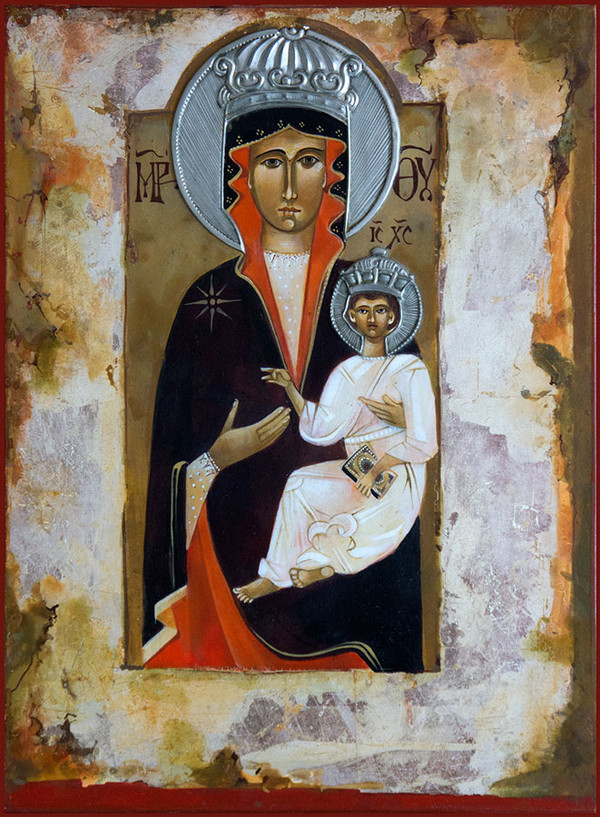
The Virgin Who Shows the Way
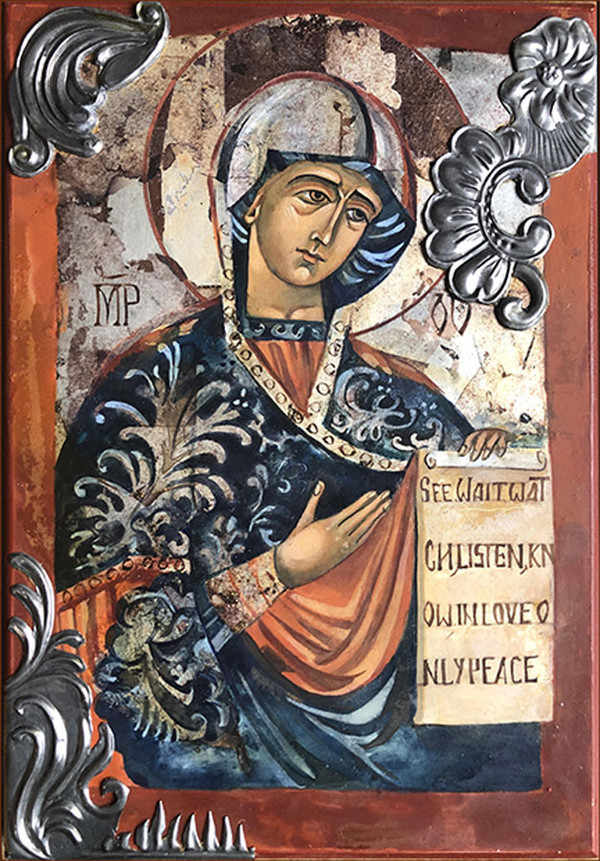
Contemplative Mary
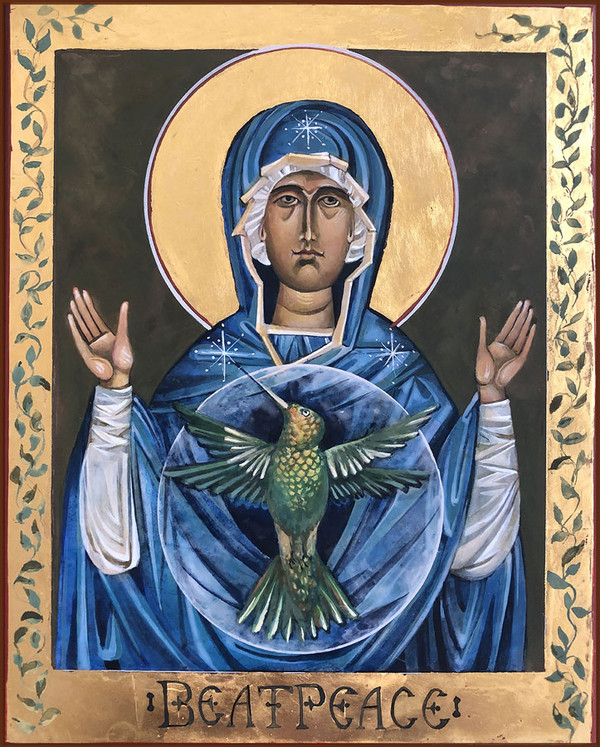
Be at Peace
Outside Time and Space
Christ Reflected in Water